Networking For Your MBA Applications
Last week, Vantage Point MBA Senior Consultant Katie M. hosted a webinar on GMAT Club’s YouTube channel. She tackled a timely topic: networking for your MBA applications. MBA networking can feel especially abstract in an already subjective application process. Many applicants see it as another task on a long MBA application to-do list. What is it exactly? Do you really need to do it? How will it help you get into your dream school? How do you get started? Katie answered all of these questions during her session, which I’ve summarized below.
Networking plays a critical part in your MBA application process and now’s the perfect time to get started – before the schools release essay questions and you manage a busy work schedule, summer vacations, and your apps.
WHAT IS NETWORKING?
Let’s start there. It’s easy to be confused about what “networking” even means. (I was certainly unsure about what it was when I first started with my MBA applications.) Some folks think it’s very transactional or artificial (i.e. schmoozing), where you reach out to someone to “get something” like a favor, information, or introduction to another person. While that may be true for some people, that’s not the approach or attitude that we recommend. Instead, simply put, networking is building relationships.
For your MBA applications, networking means building relationships with people connected to the process. It’s a two-way street. You get to know people, and they get to know you. Usually, you initiate the relationship because you share something in common. This might be a friend, an interest, a hobby, or an employer. You nurture the relationship because you invest in it. Both parties enjoy it and benefit from it.
Oh so “networking” is just a fancy way of saying “meeting new people”, right? Well, yes and no. Yes, because that’s often true but no, because it’s mostly about what happens after the initial meeting and more importantly, you want to be strategic in your approach. Focus your efforts on relationships with people who can guide and support your MBA application journey. Avoid relying on people who discourage your goals. For example, your disgruntled colleague who doesn’t feel like the company “rewards” her for having an MBA may not be the best person to ask about the long-term value of the degree.
For example, you might contact a former classmate who now attends HBS. Start with a phone chat, meet for coffee during a campus visit, and reconnect before submitting your application. That’s a strong example of effective MBA networking. You’re sure to gain some valuable insights and advice about the school, its culture, essay tips, etc. through those interactions. And who knows, maybe she’s recruiting at your company for a post-MBA role and you can share your experience with her in return.
It’s ultimately up to you to find your own personal style of networking that makes you feel comfortable and authentic but rest assured that doing this right will only contribute to stronger applications.
WHY IS NETWORKING IMPORTANT?
Now you understand that networking is an important part of the application process but why exactly? You can look at this in a couple of different ways. Other MBA applicants are likely networking and using every available resource. If you ignore networking, you may fall behind in the admissions process. For an even better reason that doesn’t involve “because everyone else is doing it”. Networking helps you create a stronger and more cohesive MBA application. As a result, it can improve your chances of admission. Let’s dig into how that can be.
First, networking helps you discover new things about a school, a career path, or a company. This information helps you solidify your fit and your “reasons why.” Most of the time, you can’t find this information on a website. For example, a thoughtful answer backed by strong research to “why school X fits you and your goals” can make the difference. It can be what gets you admitted.
Networking is also a tremendous opportunity to get valuable advice from folks who have been in your shoes. Learn about the unexpected benefits of an MBA from a recent graduate, learn from past MBA students’ mistakes, and get admissions “tips” from folks who have insight into the process. The advice you get along the way can help make the process more efficient, straight-forward, or at least slightly less stressful for you.
Lastly, the MBA application process can seem like a long, lonely journey and it’s nice to feel supported along the way. My clients are usually blown away (I know I definitely was) by how supportive and helpful current students, alums, colleagues with MBAs, etc. are once they find out you’re pursuing an MBA. MBA’s love to pay-it-forward so let them! Just be sure to be appreciative and stay in touch with them once you have news about decisions so they can remain invested in your journey.
WHAT NOT TO DO
It should go without saying that all social etiquette rules apply in MBA application networking but just as a quick refresher, here are a few key “DON’Ts”.
DON’T wait until the last minute: networking is not an on-off switch and should be approached like a marathon, not a sprint. Building relationships, scheduling coffee chats, etc. takes time. So start early – like now! Give yourself space to follow-up with your new contacts and keep in touch with them throughout the process. Waiting until two days before the deadline to reach out to a current student with a list of questions whose answers you will plug into your “why school X” essay will not do you any favors.
DON’T ask basic or shallow questions: when you’ve finally nailed down that coffee with an alum from your dream school, don’t waste their time asking questions whose answers you could easily find on your own. Instead, do your homework before the meeting and come with thoughtful questions whose answers will truly further your understanding of how the school fits with your goals and objectives. (Here’s a more comprehensive school selection tool if you’re just getting started.) Show that you’ve done your research before the conversation. A strong impression may encourage someone to support your candidacy later.
DON’T be disrespectful or ungrateful for the other person’s time: MBA students, alums, representatives from admissions, etc. are all very busy and while they’re happy to help, it takes effort on their part. So be sure to express your gratitude for their time and input. If they tell you they can only spare 20 minutes, remain vigilant of the time and say your thank-you’s and goodbye’s when it’s up. Those manners leave a lasting impression.
HOW TO GET STARTED
With all that said, there’s really no wrong way to start building your network. In thinking about what the ideal network looks like, it comprises current students and/or alums from your target schools, colleagues/former classmates/mentors, etc. with MBAs, and people in your target post-MBA industry/function. (Note that these three categories are not mutually exclusive – most likely one person falls into more than one bucket.)
An easy place to start is with your existing network – people from work, your undergrad, personal circles, etc. who have MBA’s or are somehow connected to an MBA program. Make a list of these individuals and start reaching out to them for a coffee chat, after-work cocktail, or phone date. Be present during these conversations and take mental note of what you discussed.
If you chatted about a particular current event or recent trend in your industry, for example, send that person an article on the relevant topic a couple of weeks later to show that you give as well as receive. After each meeting, be sure to ask that person to connect you with someone else from his/her network who could be helpful in your application process. Then repeat. Here’s a great worksheet we’ve created to help you get organized.
Even if some folks above are current students or graduates from your target schools, you should also engage with the schools directly. Plan a campus visit. Coordinate it through the school so you can sit in on a class. You will also meet current students and attend an admissions presentation. These are great opportunities to hear what the schools believe are their selling points while giving you a chance to ask questions. In the case of live info sessions, local alumni as well as representatives from admissions typically attend these events so it’s a great time to initiate a dialogue with a few of those folks.
Those conversations could even become a follow-up meeting or call, depending on how well you connect with them.
Engaging directly with schools helps you understand program fit. It also shows the admissions committee that you are serious about the program.
some schools weigh this heavily in admissions decisions so it’s worth putting in the time (i.e. more is more!).
Lastly, you can take advantage of third party platforms and events to further build out your network. LinkedIn, MBA forums (reddit, GMAT Club, Beat the GMAT, etc.), and formal networking events (Poets & Quants is hosting a couple this year, for example) are all great places to engage if you feel like your network is still a bit sparse.
If this seems like a lot of work, it is! But it should be fun. After all, one of the most valuable benefits of an MBA is the network so getting started during your applications will only give you a head start once you arrive on campus in the fall. Best of luck!
*******************
Get Expert MBA Networking Help
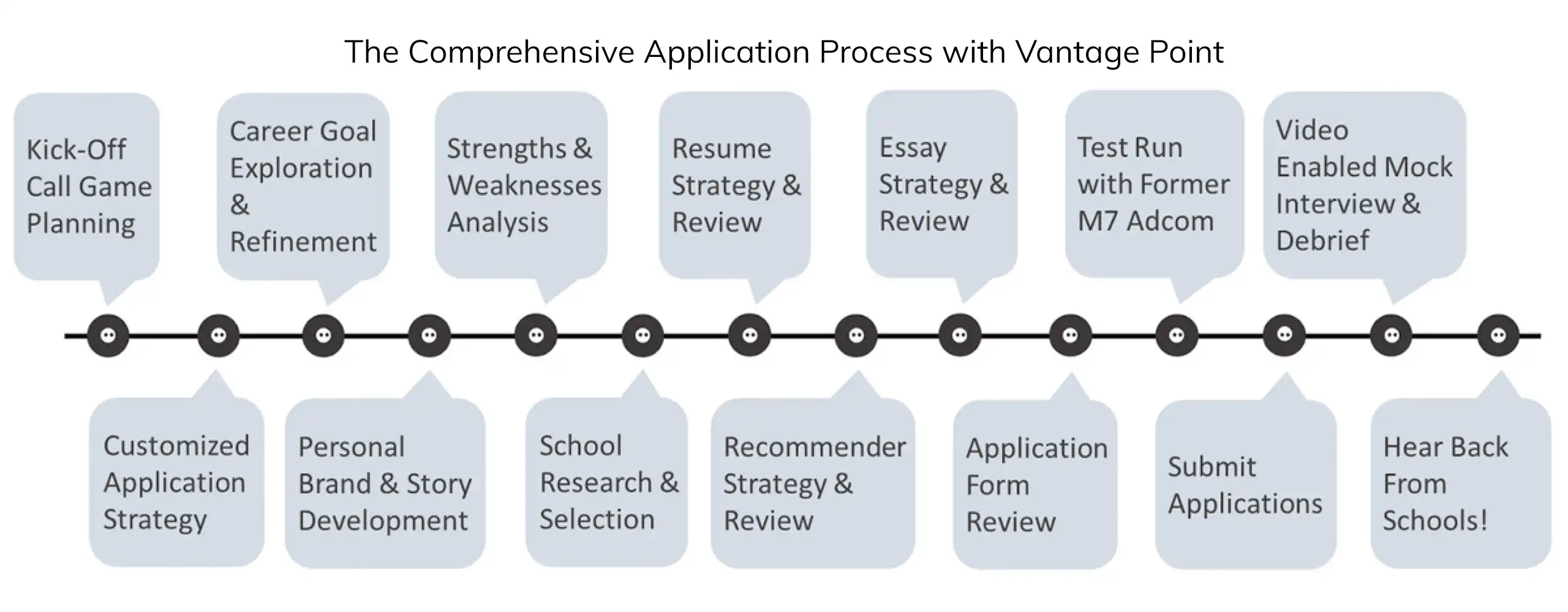
We include MBA networking in all Comprehensive Packages. It’s that important. Your consultant builds your networking plan. We facilitate introductions. Connect with post-MBA professionals. Meet current students. Reach alumni from your dream school. Supplement your independent efforts. Request an initial consultation. Learn how we help.

After embarking on my own MBA journey, I founded Vantage Point MBA Admissions Consulting to help aspiring business school students get accepted to the top MBA programs in the U.S. and Europe. As President, I currently lead a team of over 25 superstar consultants to give our clients an unmatched experience, with a focus on white glove, personalized collaboration and mentorship.