


Networking For Your MBA Applications
In the already subjective MBA application process, “networking” seems particularly abstract. What exactly is networking in this context? Do you really need to do it? How do you get started?
What Is Networking?
Let’s start there. Some folks see networking as transactional. They see it as schmoozing. You reach out to someone to ‘get something’ – a favor, information, or an introduction. While that may be true for some people, it’s not the approach we recommend.
Simply put, networking is building relationships. For your MBA applications, it’s building relationships. You connect with folks involved in the application process. It’s a two-way street, where you get to know people and they get to know you.
So “networking” is just a fancy way of saying “meeting new people”, right? Yes, but it’s more than that; you want to be strategic in your approach. Invest your efforts in building relationships with folks who can help guide and inform your MBA application process. This could be a former classmate. They might be a first-year student at HBS now. Schedule time to chat with her. You’ll gain valuable insights. You’ll learn about the school, its culture, and essay tips. And who knows? Maybe she’s recruiting at your company. You might share your experience with her in return.
It’s ultimately up to you to find the networking approach that feels comfortable and authentic, but rest assured that making the effort will contribute to stronger applications.
Why Is Networking Important?
Why, exactly, does networking contribute to stronger applications? Simply put, your competition is doing it and if you’re not, you risk losing out. More importantly, networking can help you put together a more cohesive and compelling application, which increases your chances of admission. Let’s dig into how that plays out.
First and foremost, networking is an opportunity to discover new things about a school, a career path, a company, etc. that can help you solidify your fit and “reasons why” for any of them. Most of the time, that kind of information can’t be found on a website. Trust us, providing a thoughtful and well-researched answer to “why school X is the right fit for you and your goals” can be the difference that gets you admitted.
What Not to Do
It should go without saying that all social etiquette rules apply in MBA application networking, but just as a quick refresher, here are a few key “DON’Ts”.
DON’T wait until the last minute. Networking should be approached like a marathon, not a sprint. It takes time, so start early – like now! Waiting until two days before the deadline to reach out to a current student with a list of questions whose answers you will plug into your “why school X” essay will not do you any favors.
DON’T ask basic or shallow questions. When you’ve finally nailed down that coffee with an alum from your dream school, don’t waste their time asking questions whose answers you could easily find on your own. Instead, come with thoughtful questions whose answers will truly further your understanding of how the school fits with your goals and objectives. You want the other person to be impressed with your level of research because, who knows, they may end up advocating for your candidacy if they also feel like you’re the right fit for their school!
DON’T be disrespectful of or ungrateful for the other person’s time. MBA students, alums, representatives from admissions, etc. are all busy and while they’re happy to help, it takes effort on their part. So be sure to express your gratitude for their time and input. If they tell you they can only spare 20 minutes, remain vigilant of the time. Those manners will go a long way in leaving a good impression.
How to Get Started
There really isn’t a wrong way to start building your MBA network. However, an ideal network includes three groups. First, current students and alums from your target schools. Second, colleagues and mentors with MBAs. Third, people in your target post-MBA industry. (Note that these three categories are not mutually exclusive – most likely one person will fall into more than one bucket.)
Start with your existing network and think of people who fall into one or more of these categories. Then reach out to them for a phone call or COVID-friendly coffee. After each meeting, be sure to ask that person to connect you with someone else from his/her network who could be helpful in your application process. Then repeat.
Even if you know students or alums, engage with the schools directly too. With school visits still on hold, this can be as easy as attending a webinar hosted by admissions. These are great opportunities to hear what the schools believe are their selling points while giving you a chance to ask questions. It also indicates to the adcom that you’re serious about their program and have made the effort to get to know them.
Lastly, use third-party platforms and events. These help you build out your network further. LinkedIn, MBA forums are great places to engage. Try reddit, GMAT Club, Beat the GMAT. Also look for formal networking events. Poets & Quants is hosting some this year. These all help if your network feels sparse.
If this seems like a lot of work, it is! But it should be fun. After all, an expanded network is one of the most valuable benefits of an MBA. Getting started on this during the application process will only give you a head start once you arrive on campus in the fall. Best of luck!
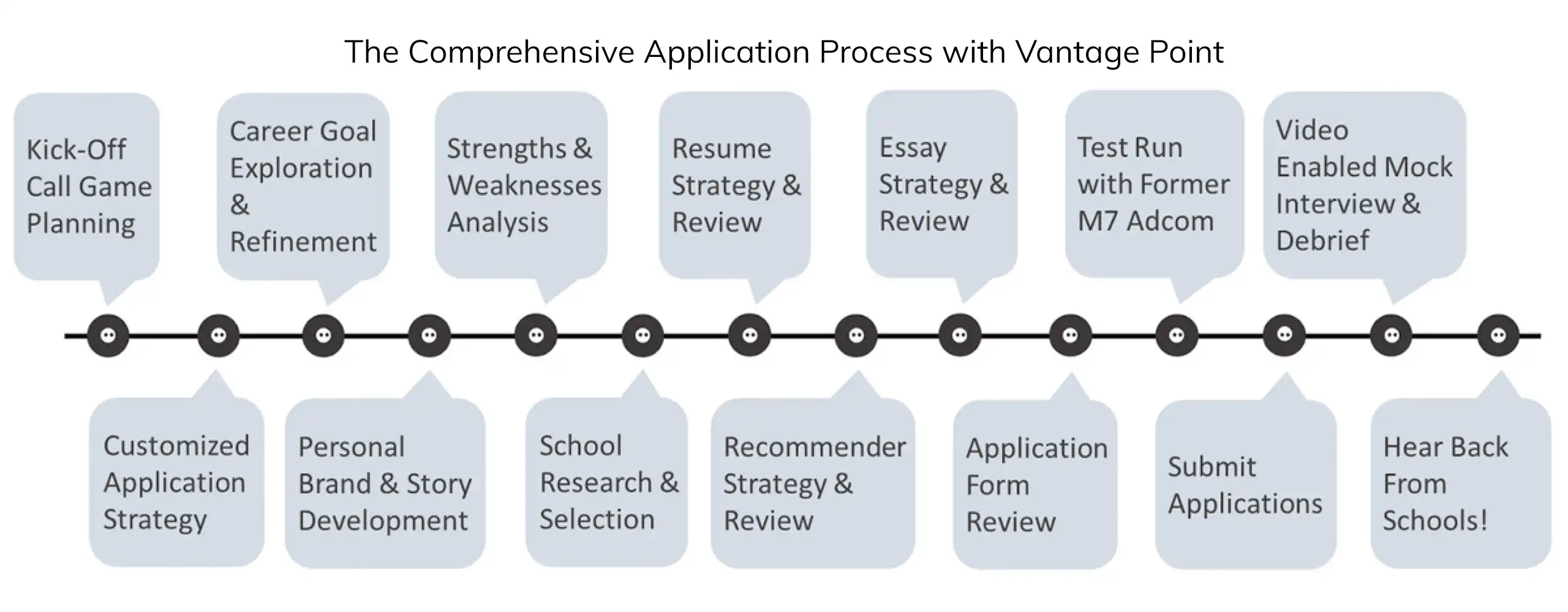
Did you know that we include a networking component in our Comprehensive Packages? That’s how important it is! Your consultant will help you create a networking plan and will even facilitate introductions to a post-MBA professional (in your desired career path) and/or a current student or alum of your dream school to supplement your independent efforts. Request an initial consultation to learn more about how we can help you in your application process!

After embarking on my own MBA journey, I founded Vantage Point MBA Admissions Consulting to help aspiring business school students get accepted to the top MBA programs in the U.S. and Europe. As President, I currently lead a team of over 25 superstar consultants to give our clients an unmatched experience, with a focus on white glove, personalized collaboration and mentorship.
Pingback: The MBA Application Process: Do This Now | Vantage Point MBA
January 16, 2025 5:40 pm